
Books and PDFs By Robert W. Lucas
The following is a list of books by Robert W. Lucas. Content for these publications is derived from the author’s experience, expertise, and research.
 THE COMPLETE GUIDE TO OCEAN CRUISING: Everything You Need to Know for a Great Vacation by Robert W. Lucas and Stephen A. Tanzer
352 pages ISBN:978-19389884046 
Save Money and Learn How to Get the Most from Your Next Cruise.
For years, the authors have traveled the world and have seen the good, bad, and ugly related to ocean cruising. They wrote this book to share their experiences and lessons learned from over one hundred and sixty collective cruises. The suggestions included in The Complete Guide to Ocean Cruising are for new and experienced cruisers alike. They provide a comprehensive approach for identifying, booking, and enjoying cruises that meet your needs, expectations, budget, and preferences.
Whether you are new to ocean cruising or just curious about how they differ from river cruises or other types of traditional land-based vacations, The Complete Guide to Ocean Cruising is for you. In it, you will find explanations about the cruise industry, cruise process, helpful tips for saving money, a resource section with useful cruise-related information, and answers to virtually any question you might have about this form of travel.
BOOK AWARDS:
2019 – NYC BIG Book Award – Distinguished Favorite
View the PREVIEW below for more information.
 Profitable Book Selling: Build Your Brand and Make More Money by Robert W. Lucas
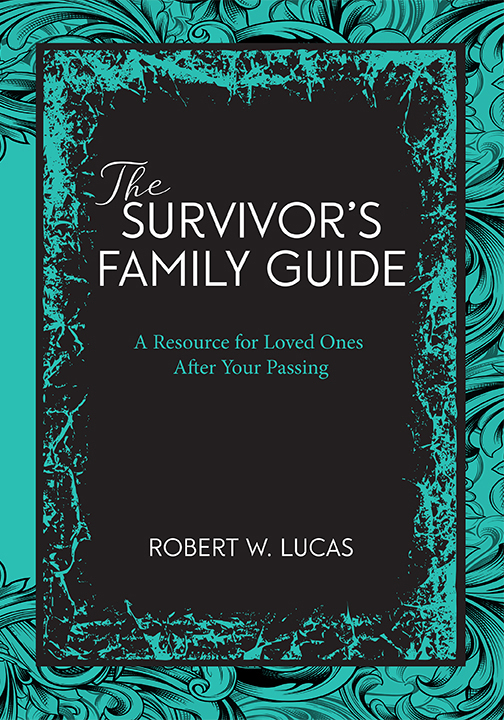 THE SURVIVOR’S FAMILY GUIDE: A Resource for Loved Ones After Your Passing by Robert W. Lucas
194 pages ISBN: 978-1-939884-02-2
If you died tomorrow, would your loved ones know how to access all your social media, personal websites, and blogs, financial accounts to pay bills, and ultimately close down your accounts? Without user names and passwords and a Durable Power of Attorney in hand, he or she could not act in your place. Where do you keep that information?
The Survivor’s Family Guide is designed to provide a tool for everyone to prepare for the inevitable day when he or she is no longer on this Earth. It is an indispensable resource that anyone can complete to provide the type of information that only they have related to personal and business affairs. By using this book to share crucial information and last wishes or messages with your loved one, you are giving a lasting gift of love. It is a resource for those who are dear to you. By following the prompts within this book and providing valuable information, you can help ease the burden of dealing with your passing for your spouse or significant other. With it, they will have most of the important information that they will need to settle your estate, handle arrangements for your final departure, and move on with their life. They can also refer to The Survivor’s Family Guide in the future as a source of important information about you.
People who can benefit from The Survivor’s Family Guide include:
- Seniors
- Family members and caretakers
- People facing serious illness
- Parents and young adults
- People living overseas
- Military members
- People planning travel or overseas assignment for jobs
- Anyone wanting to help loved ones
BOOK AWARDS:
Florida Authors & Publishers Assn President’s Book Awards – Silver Medal
Best Book Awards Finalist
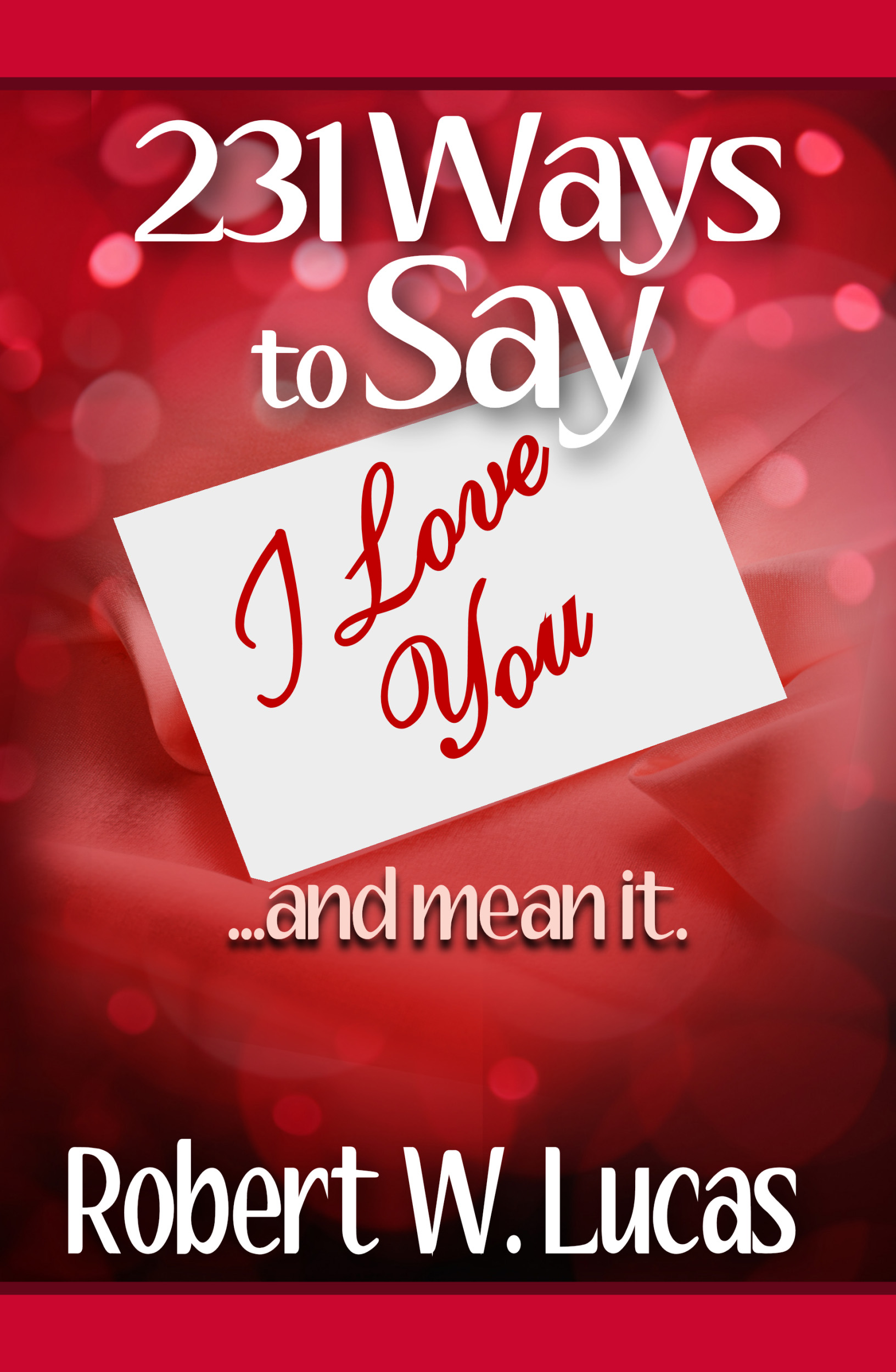 231 WAYS TO SAY I LOVE YOU…AND MEAN IT by Robert W. Lucas
150 pages ISBN: 978-1-939884-01-5
Bring love, romance, and the “spark” to any relationship with 231 creative and fun strategies outlined in this concise couple’s resource.
231 Ways to Say I Love You is divided into 10, in addition to a “Plan for Love” Worksheet, list of 55 Things You Should Know About Your Loved One, and listings of books, videos, and other useful resources that relate to the suggestions in the book.
Topic areas include:
- Intensify Your Relationship – Ideas for building and maintaining a connection with your loved one.
- Bring Back the Romance – ways to show that you care and how much your spouse or significant other means to you.
- Tap the Element of Surprise – fun and creative ways to share your message of love and caring
- Strengthen the Communication Flow – strategies for verbally and non-verbally displaying your love through messages you send.
- Recapture Passion and Sensuality – approaches you can use to add or rekindle the passion of a new relationship at any point in your life.
- Reinforce Caring and Support – ideas for reassuring your loved one that you care and letting them know how much they mean to you.
- Maximize Time Spent Together – techniques for ensuring that you do not let the events of everyday life supersede or get in the way of your relationship.
- Capitalize on Spontaneity – making the most of every moment by reconnecting at unexpected times and in meaningful ways.
- Make the World Your Vehicle for Love – capitalizing on unique places and trips that you can take with your loved one to build new memories and grow your love.
- Give the Gifts of Love – ideas for fun, unique and interesting things you might give as a present for a special occasion or “just because” to let your spouse or significant other know how much you care.
BOOK AWARDS:
-Best Book Awards Finalist
-Next Generation Indie Book Awards Finalist
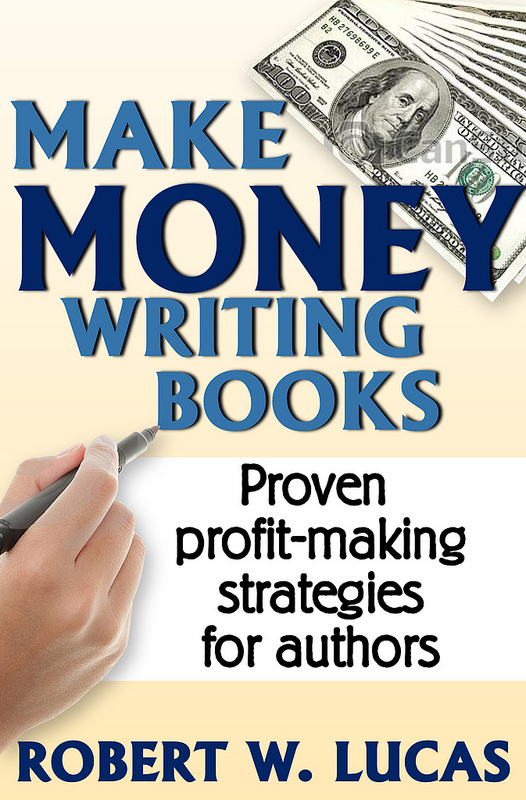 MAKE MONEY WRITING BOOKS: Proven Profit Making Strategies for Authors by Robert W. Lucas
162 pages ISBN: 978-1-939884-00-8
Making money while he sleeps has been a passion of internationally-known author and consultant Robert (Bob) W. Lucas for years. He has sold over 250,000 books, with several translated into other languages since his first book was published in 1994. Still, he always knew that there had to be other ways to supplement his income and book royalties. That is why he began employing the valuable strategies he shares in this concise publication. Bob has successfully applied all the approaches discussed in Make Money Writing Books.
The techniques you will read about inside these covers require you to spend a bit of time and effort to do research, network with others, and periodically do some writing. In return, you will put a mechanism for solid income into motion.
Make Money Writing Books by Robert W. Lucas will show you how to:
- Financially succeed as an author and independent publisher.
- Brand yourself and your books to increase book sales and make more money.
- Develop strategies that will effectively promote you and your books.
- Use today’s technology to build a strong image and following for your books.
BOOK AWARDS:
Next Generation Indie Book Awards Finalist
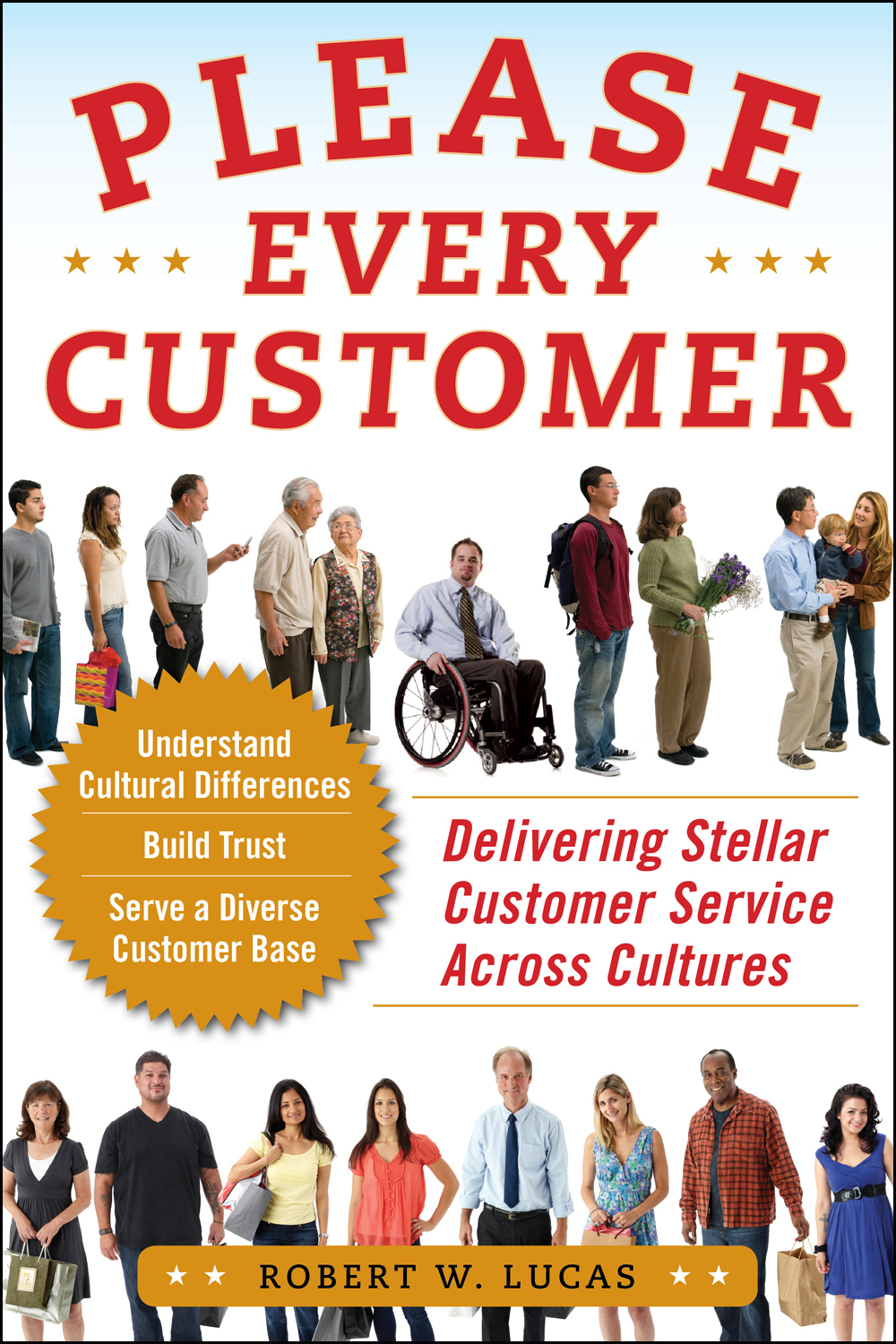 Please Every Customer: The Ultimate Guide to Delivering Stellar Service Across Cultures by Robert W. Lucas
336 pages ISBN: 978-0-07-174836-0
Deliver valuable service to a new world of customers!
As the economy globalizes, customers are becoming more and more diverse—making your job harder than ever. Regardless of differences in language, values, age, abilities, and other factors the pressure is on to deliver exceptional customer service every step of the way to every customer.
Help is here. Please Every Customer delivers key information about how people of different cultures and groups communicate, view relationships, approach business, and value time—so you can provide the best service for each of your customer’s needs and expectations.
Whatever nationality, age, or gender of your customer, Please Every Customer gives you the tools to:
- Overcome differences in language
- Recognize and accommodate customer needs
- Make positive first impressions
- Avoid stereotypes
- Gain trust
- Identify crucial nonverbal cues
- Listen “actively”
The age-old customer-service maxim “the customer is always right” isn’t enough anymore. Use Please Every Customer as your roadmap to the new world of customer service.
 ENERGIZE YOUR TRAINING: Creative Techniques to Engage Learners by Robert W. Lucas
200 pages ISBN: 978-1562866938
Haven’t you always wanted to be one of those amazing trainers and educators whose classes are fun and unforgettable and deliver impressive results? 
Now you can learn the secrets of energizing your delivery methods so that you can inspire, educate, and encourage your learners from master trainer Bob Lucas. Whether you’re a novice trainer or seasoned training professional, you’ll welcome this collection of 438 tools for designing, developing, and delivering programs that are dynamic, effective, interactive, and just plain fun!
But make no mistake: This is not just a volume of tricks and tips. Energize Your Training connects the dots among learner motivation, communication, effective training methods, and how the human brain works. These classroom-tested techniques and strategies are proven to stimulate learners’ thought processes, enhance retention and recall, and ensure that the learning experience is applied in the workplace.
You’ll learn how to:
-
- Assess learner needs so that you can create memorable events.
- Develop learning aids and create a stimulating environment.
- Schedule learning events that coincide with learner circadian rhythms and address work- and travel-related issues.
- Get learners’ attention, connect with them, and engage them.
- Handle unique groups and personality issues.
- Reinforce learning and accomplish the transfer of learning to the job.
A wealth of clever ideas for using visual aids, props, music, toys, crafts, games, and activities will enliven your presentations. Plus every chapter includes “Putting It to Work” recommendations to guide you toward implementing major concepts in practical, real-world ways.
You’ll find yourself energized by the variety of ingenious methods you can use to improve your delivery and create an invigorating, memorable, results-focused training program. With Energize Your Training at your fingertips, you can help learners succeed and you can earn a reputation for effective teaching with “never a dull moment.”
Here’s what people are saying about this exciting new workplace learning resource:
“In my 24 years as an advocate for enjoyable and effective training and education, Bob Lucas stands out as a leading light on interactive strategies. In Energize Your Training, Bob delivers what every trainer and educator needs: an organized, easy-to-read, practical toolkit chock full of formulas that will energize even the most boring subject.”
Lenn Millbower, the Learnertainment Trainer teaches techniques that keep ’em awake so the learning can take.
“The training materials and learner activities help trainers (and instructors) focus on real-life situations. If you need a book that takes from discovering how learners learn to abundant ways to create an exciting learning environment, this is it.”
Sharon Massen, PhD., Instructor, Office of Continuing Education, The Ohio State University, Columbus, Ohio.
BOOK AWARDS:
Florida Authors & Publishers Assn President’s Book Awards – Gold Medal
 TRAINING WORKSHOP ESSENTIAL: Designing, Developing and Delivering Learning Events That Get Results by Robert W. Lucas
352 Pages ISBN: 0470385456
This unique training resource offers trainers, educators, and facilitators a hands-on guide for designing and implementing training workshops and sessions that incorporate concepts learned from research on how the human brain best obtains, retains, and recalls information. By using this proven approach, trainers can create memorable workshops that are dynamic, innovative, fun, and effective events.
The author shows how to design, develop, and deliver training from a whole-brain perspective that addresses the three different learning modalities (auditory, visual, and kinesthetic). Trainers can tap into accelerated learning strategies, address the needs of different generational and diverse learners, and employ learner-tested techniques by applying key concepts from this book.
Training Workshop Essentials covers all the basics including selecting a topic specifically to address audience needs and much more. It provides a step-by-step process for creating an outline, designing, developing, and using brain-friendly support materials, choosing the appropriate location (with the right equipment and furnishings), selecting the best time and date for training delivery. The book also offers tips for presenting the content to learners creatively and professionally.
Training Workshop Essentials offers brain-based strategies and techniques that go beyond typical training methods. These approaches will reach out and pull learners into the session’s content, and allow them to truly experience and retain the information long after the training ends.
BOOK AWARDS:
Florida Authors & Publishers Assn President’s Book Awards – Gold Medal
Axiom Business Book Awards – Gold Medal
 THE CREATIVE TRAINING IDEA BOOK: Inspired Tips and Techniques for Engaging and Effective Learning by Robert W. Lucas
460 pages ISBN: 0-8144073-3-1
From the author of the popular book, The Big Book of Flip Charts, comes a definitive reference of creative ideas, strategies, and techniques guaranteed to enhance any adult learning environment.
Based on the author’s three decades of training experience, this invaluable resource gives trainers the tools to adopt a fun, energetic approach that will make for a stimulating learning environment. Readers will learn new methods for:
- Setting the right tone
- Uncovering participant needs
- Grouping participants and selecting leaders
- Avoiding and reclaiming turnoffs
- Encouraging and rewarding participation
Filled with checklists, forms, resources, and dozens of “Bright Idea” blurbs, The Creative Training Idea Book will help trainers and trainees achieve maximum learning results.
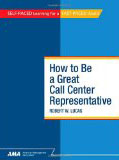 HOW TO BE A GREAT CALL CENTER REPRESENTATIVE by Robert W. Lucas
175 pages ISBN: 0-7612-1346-5
Finally! There is now an effective resource for organizations, trainers and individuals involved in call center service. How to be a Great Call Center Representative is a comprehensive reference that can be used as a text, self-study guide, or participant manual training call center representatives.
In this course, users will learn what technology-based customer service is all about — a brief history, terminology, CSR competencies required, and interpersonal skills necessary to be successful in dealing with a variety of customer service situations. How to Be a Great Call Call Center Representative gives the tools needed to feel confident in handling customers, and the foundation for future growth and advancement.
Because of the diverse ways in which technology is being used to serve customers in various industry call centers, the material covered in this course is fairly generic so that it can be adapted to most call center and customer care environments. Additionally, there are numerous local, state, and federal guidelines to which call center employees must adhere. By following information provided by supervisors or team leaders and using what is learned in How to Be a Great Call Center Representative to supplement and enhance knowledge and skills, users can begin immediately providing quality customer service.
Included in the price is an examination that can be taken and forwarded to The American Management Association for grading and issuance of a certificate. Also, users have a specially created AMA web-site for support and questions arising as they take the course. No other product on the market gives all this!!
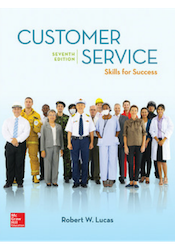 CUSTOMER SERVICE SKILLS FOR SUCCESS, 7th ed. by Robert W. Lucas
436 pages ISBN: 978-1260092509
With over 200,000 copies of Customer Service Skills for Success sold worldwide, this sixth edition of this best-selling customer service text has almost 100 additional pages of content than its previous edition. This book won the 2017 Textbook Excellence Award from the Textbook and Academic Authors Association.
In addition to new ideas and strategies for delivering stellar customer service in a variety of settings and ways, it features techniques for identifying common customer service issues and proven approaches to address them.
The focus of the ten-chapter book is to raise awareness, prompt thinking, give many step-by-step suggestions for service improvement. Additionally, it provides readers with a valuable reference for information on how their organization can deliver service excellence. The information contained in the book will benefit you whether you are new to dealing with others in a service environment or are more experienced with internal (e.g. coworkers or other employees) and external (e.g. consumers, vendors, other end-users of products, suppliers, businesses, dealers, and distributors) customer encounters.
For educators who adopt Customer Service Skills for Success as a textbook, there is a dedicated website with instructor notes, PowerPoint® slides for each chapter, video vignettes to support classroom discussion, and a test bank of questions.
BOOK AWARDS FOR CUSTOMER SERVICE SKILLS FOR SUCCESS:
-Textbook & Academic Authors Assn – 2017 Textbook Excellence Award
-Textbook & Academic Authors Assn – 2019 McGuffy Longevity Award
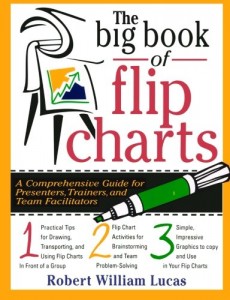 THE BIG BOOK OF FLIP CHARTS by Robert W. Lucas
258 pages ISBN: 0-071343-11-3
Despite all the razzle-dazzle technology around, there’s still no more lively, informative, or audience-friendly manner to make an impact than with flip charts. But using flip charts well is a skill that must be developed. In this comprehensive handbook, professional trainer and communications expert Bob Lucas explains the basic design principles and techniques that professionals use to make impressive flip charts. He shares effective “tricks of the trade” that make an impact to the back of the room.
In addition to tips on drawing and displaying great-looking flip charts, Lucas explains how flip charts can help make you a better facilitator. Over two dozen creative flip-chart-based group activities are included to help you lead a brainstorming, team building, or problem-solving session. Each activity uses flip charts to draw out the best ideas and creative thinking from your group. For presenters who want to jazz up their “text-only” flip charts, but don’t know how to draw, dozens of ready-to-copy flip chart graphics, icons, and templates make it easy to create something special with minimal effort. You’ll learn how to use lettering in an attractive and impactful way; understand spacing, use color, and creative fonts. The Big Book of Flip Charts is the ultimate reference guide for flipcharts, covering not just writing and displaying techniques but layout and graphics, as well as flip chart facilitation activities.
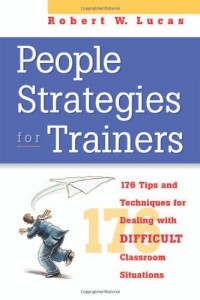 PEOPLE STRATEGIES FOR TRAINERS: 176 Tip and Techniques for Dealing with Difficult Classroom Situations by Robert W. Lucas
224 pages ISBN: 0-8144-7261-3
Whether you’ve taught one class or thousands, you already know that all learners are not created equal. Are you able to create a learning environment where every participant is getting maximum value, or are you letting different styles, attitudes, and circumstances affect your sessions?
People Strategies for Trainers is packed with practical techniques to help you reconcile a variety of issues, such as dealing with participants from different generations, those with disabilities, and those who speak English as a second language.
Of course, there are also show-offs, clowns, and “experts” agitators and revolutionaries, poor listeners and distracted participants, latecomers, and unprepared students. People Strategies for Trainers will help you manage all of these and many others, ensuring an engaging and dynamic learning environment.
This valuable resource also gives you easy-to-use tools for creating your training materials; creative strategies for grouping learners and selecting volunteers; and a variety of interactive room arrangements to help foster group learning. Plus, you’ll get a concise and applicable overview of Abraham Maslow’s Hierarchy of Needs Theory of Motivation, which will help you better understand what drives your participants to learn. A powerful combination of the latest thinking and real-world solutions, People Strategies for Trainers will help you build a learning environment in which all of your participants can realize their full potential.
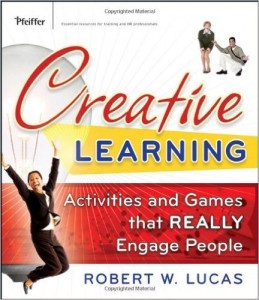 CREATIVE LEARNING: Activities and Games That REALLY Engage People by Robert W. Lucas
Pages ISBN: 0-7879-8740-9
Creative Learning: Activities and Games that Really Engage People was written by master trainer Bob Lucas and provides a wealth of new activities and games that can be used by trainers, presenters, and educators in virtually any type of indoor learning environment. Lucas presents the theory and concepts behind using games and activities and discusses the research that supports the case for focusing on brain-based (active) learning, and the benefits of adding fun and novelty to the learning environment to enhance the transfer of learning from the classroom to the workplace. He also offers guidance on the possible scenarios when these brain-based games might be appropriate. The remainder of the book offers a creative collection of activities for use throughout any training event.
The book includes “getting started” activities to build and continue the momentum, as well as useful ways to create a bridge from learning to application.
Creative Learning: Activities and Games that Really Engage People :
-Is filled with icebreakers and introductions, motivators, brainteasers, energizers, transition and reinforcement activities, stories that teach, and powerful session closers.
-Was written by a leader in creative training and a former two-time chapter president of the Central Florida Chapter of ATD.
-Takes a brain-friendly approach that is guaranteed to elevate ordinary training to extraordinary levels.